
Plastic moulding: from design to the finished component
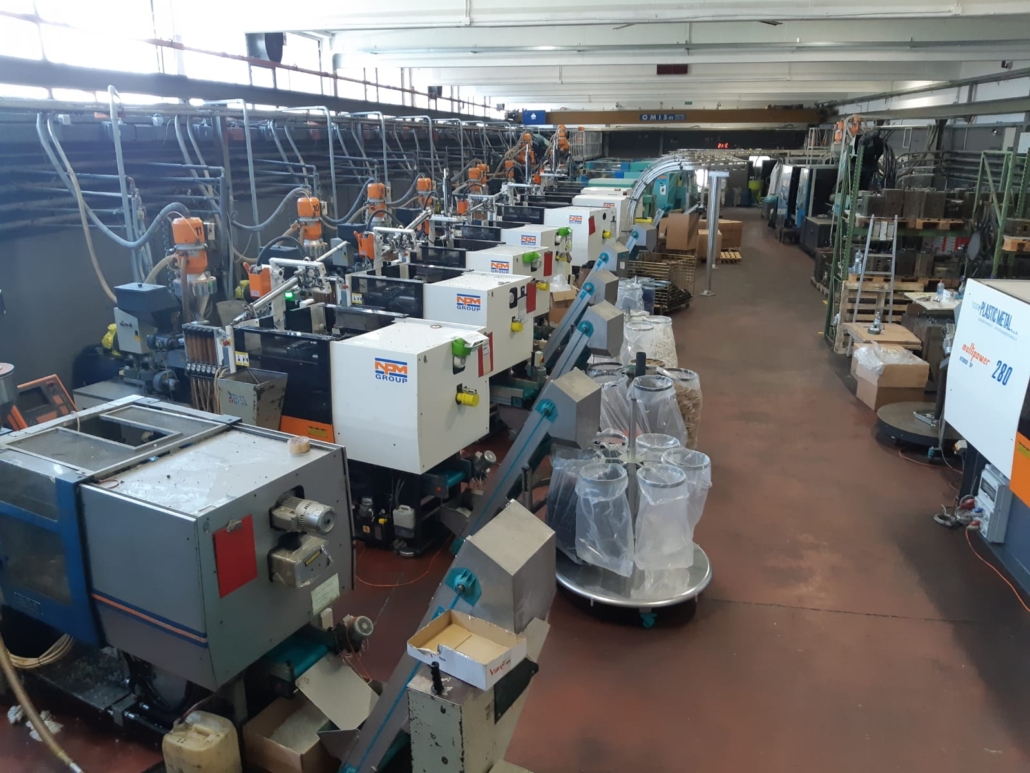
Developing a plastic component from a drawing: where to start
Many companies reach a point where the component they need does not exist in any catalogue: a specific geometry, a material with particular properties, a part designed for a special application. This is where plastic moulding on a third-party basis comes into play, meaning the option of entrusting an external manufacturer with the production of plastic components developed from a drawing. It is a path that goes well beyond production alone: it includes design, mould construction, material selection and inspection of the finished part. In this guide we will look at the main stages of the process, from the first design idea through to the component ready for use, and at which aspects to consider in order to achieve the right balance between quality, reliability and cost optimisation.
What third-party plastic moulding is
The term third-party moulding refers to entrusting a specialised manufacturer with producing plastic components to the customer’s specification. The commissioning company brings a need, a technical drawing or even just an idea to be developed, and the manufacturer turns it into a real part, managing the entire production cycle. It is a solution chosen by those who do not have an in-house moulding department, or by those who prefer to outsource production in order to focus on their core business.
The injection moulding technique
In most industrial applications, the process is based on plastic injection moulding: the plastic material is melted and injected under high pressure into a mould, where it cools and takes on the desired shape. This technique makes it possible to produce components with high dimensional repeatability, short cycle times and excellent output even at large volumes, features that make it suitable both for wide production runs and for more limited batches.
Why turn to a specialised partner
Relying on a structured plastic moulding company means being able to count on technical expertise, an adequate machine fleet and material availability. A complete third-party service covers the whole path, from the initial assessment of the project through to delivery of the finished part, giving the customer a single point of contact for every stage.
Quality, reliability and cost optimisation: what to evaluate
Developing a component from a drawing means finding the balance between three objectives that influence one another. Assessing them from the outset, and not once production is under way, is what sets a well-managed project apart.
Quality as consistency over time
In series production, quality is not the single successful part, but the ability to replicate the same result thousands of times. What matters, therefore, is the precision of the mould, the stability of the material and the inspections along the cycle. A well-equipped plastic injection moulding company ensures this consistency through systematic verification procedures.
The role of dimensional tolerances
Defining tolerances consistent with the function of the part is essential: requirements that are too strict raise costs without real benefit, while tolerances that are too loose compromise coupling with the other components. The right balance comes from technical discussion during the design phase.
Supply reliability
Beyond the part itself, continuity matters: material availability, adherence to delivery times and the ability to handle reorders ensure that the customer’s production suffers no interruptions. This is often a decisive aspect in choosing a plastic moulding partner.
Cost optimisation
The cost of a component is not limited to its unit price. Careful design, a considered choice of material and the reduction of waste all affect the overall cost. Many companies pair custom components with solutions already available in the product range, finding the most efficient balance between dedicated development and standard items.
From drawing to part: a decision prepared in advance
The real turning point in a moulding project is not the machine that produces the part, but everything that happens before that part exists. The choices made about the drawing, the material and the tolerances determine in advance how good, reliable and cost-effective the result will be. When these decisions are postponed to the production stage, the room for correction shrinks and costs rise.
This is why it makes sense to think of the component as a journey rather than a simple purchase. Bringing your real requirements, the operating conditions of the part and your budget constraints into the design phase makes it possible to arrive at a solution that already works on the first production run, with no after-the-fact adjustments. This is the approach that turns the development of a component from a drawing from an unpredictable expense into a controlled investment.