
When to choose custom textile accessories for your production needs
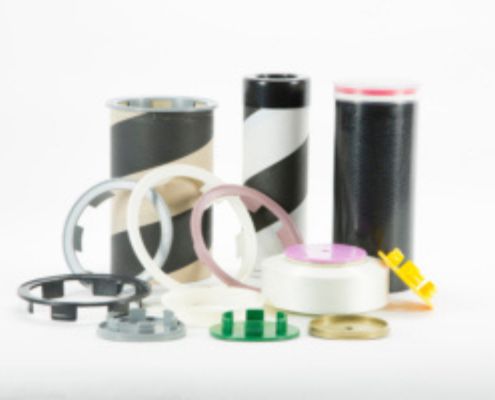
When the standard product is no longer enough
In most operations, the textile accessories available from a catalogue meet production needs effectively. There are situations, however, where the standard component reaches its limits: a machine with unusual specifications, a yarn that behaves in an atypical way, a cycle that calls for non-conventional sizes or geometries. In these cases the quality of the support is no longer only a matter of robustness and becomes a matter of fit with the process, meaning how precisely the component adapts to the real conditions of the operation. In this article we will look at when it makes sense to choose a custom solution rather than a standard product, what advantages the customisation of accessories offers, and why collaboration between customer and manufacturer, right from the development phase, is often the element that makes the difference to the final result.
How support quality affects yarn processing
Before discussing customisation, it is worth clarifying one principle: the support onto which the yarn is wound is not a neutral element, but plays an active part in the operation. The way the yarn runs, the tension with which it unwinds and the regularity of the winding depend to a large extent on the characteristics of the component that carries it.
The effect on yarn regularity
A well-calibrated support allows the yarn to unwind smoothly and consistently, an essential condition for maintaining uniform tension throughout the cycle. When the geometry or dimensions are not adequate, tension variations appear instead, translating into irregularities on the yarn and, downstream, into defects on the finished product.
The role of tolerances
Even small dimensional differences affect the result. Inconsistent measurements create play or imperfect coupling with the machinery, leading to vibration and uneven winding. The precision of the component is therefore the first quality requirement, even before the choice of material.
When the standard reaches its limit
It is precisely by observing these effects that the boundary between a standard product and a dedicated solution emerges. As long as the operation stays within usual parameters, the catalogue range of accessories for the textile industry delivers fully reliable performance. When conditions depart from the norm, however, whether in type of yarn, speed or machine specifications, adapting the component becomes the most effective way to preserve processing quality.
The advantages of a custom solution over a standard product
Choosing a customised accessory does not simply mean “modifying” an existing product, but designing a component around the real conditions of the operation. This shift in perspective brings concrete advantages, which show up both in quality and in efficiency.
Precise adaptation to the production process
The most immediate benefit is full compatibility with the machine and the yarn. A component developed to measure takes into account the dimensional specifications, the operating speeds and the stresses it will be subjected to, removing the compromises typical of a one-size-fits-all solution.
Dedicated geometries and dimensions
Diameters, lengths, thicknesses and tapers can be defined according to the application, rather than adapting the operation to a pre-existing format. This is particularly useful with textile machinery accessories that have non-conventional specifications, where even a few millimetres affect performance.
Reducing waste and interruptions
A component calibrated to the process reduces winding anomalies and imperfect coupling, with a direct effect on lowering waste and machine downtime. The greater stability of the cycle translates into more continuous and predictable production.
Impact on costs in the medium term
Although a dedicated solution may require a higher initial investment, the benefits in terms of continuity, fewer defects and component durability tend to offset the difference over time, improving the ratio between cost and performance.
The value of collaboration between customer and manufacturer
An effective custom solution does not come from a simple order, but from a shared journey. The customisation of textile accessories delivers its best results when customer and manufacturer work together from the earliest stages, combining knowledge of the process with technical expertise in producing the component.
From exchanging information to the design
The starting point is understanding the real need: type of yarn, target machine, working conditions, issues already encountered. On this basis it becomes possible to define the component specifications and avoid approximate solutions. This is the approach explored in the focus on the importance of customisation in textile accessories, where turning production needs into concrete design choices is examined in detail.
The development and validation phase
Once the design is defined, the collaboration continues into fine-tuning the component, right up to checking how it behaves under real operating conditions. This exchange makes it possible to correct any issues in good time and to arrive at a reliable, repeatable product, consistent with the required standards.
A relationship that adds value to the whole range
Customisation does not rule out the use of standard products, but complements them: the optimal solution often combines catalogue components and dedicated items. Being able to rely on a broad range of textile and furniture products makes it easier to identify, case by case, the most effective balance between standard and custom. Here the yarn accessories developed for the textile sector sit alongside the components for other applications.
Standard or custom: a choice that starts from the process
In the end, the real question is not whether a custom solution is “better” than a standard one, but which of the two responds more effectively to that specific operation. A catalogue component that is perfectly compatible is worth more than a custom item designed without a genuine need, just as a dedicated solution becomes irreplaceable when the process moves off conventional tracks.
The criterion that guides the choice therefore remains the production process as a whole: its conditions, its constraints, its goals for quality and continuity. Analysing these elements before deciding is the most concrete way to understand where the standard is sufficient and where it is worth developing a dedicated component. Reading the requirements of the operation correctly, before comparing catalogue and custom options, is what turns the selection of an accessory into a decision that genuinely supports production.